AALLES

A.A.LLES

Darmstadt Artist Residency

"12. Darmstädter Tage der Fotografie"

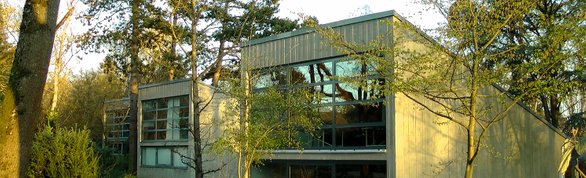
Atelierhaus LEW1, Darmstadt | March - May 2023


The Darmstadt residency marked the pivotal moment where my theoretical research on bee consciousness and environmental crisis transformed into hands-on scientific investigation and direct engagement with Joseph Beuys's artistic legacy. This three-month period provided unprecedented access to cutting-edge laboratory facilities at Technische Universität Darmstadt while immersing me in the historical context of Beuys's work at the Hessisches Landesmuseum.

Laboratory Collaboration

Institute for Nano and Micro-fluidics, TU Darmstadt


Working directly with researchers at TU Darmstadt's Institute for Nano and Microfluidics, I gained hands-on experience with advanced scientific equipment that would prove foundational to my ongoing work on bee cognition and environmental crisis.

Research Activities:

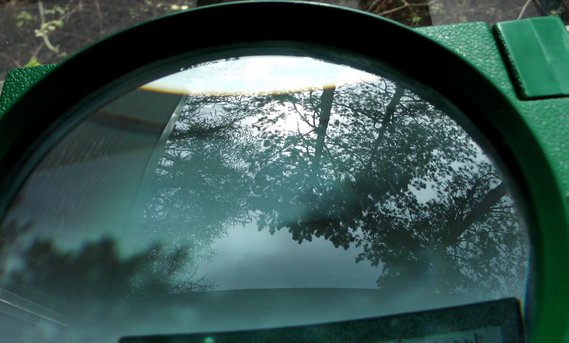
Microscope Observation and Documentation
Systematic analysis of materials I had collected over months:

  • Insect fossil inclusions in amber
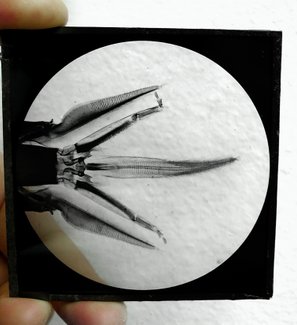
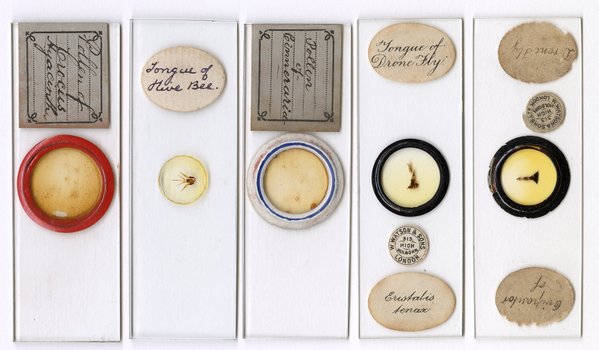
  • Victorian microscope slides featuring bee anatomy (tongues, wings, pollen, digestive systems, gut bacteria)
  • Microorganisms thriving in polluted puddles with high metal contamination


Amber Fossil Analysis
My investigation focused on enhydro inclusions—extraordinary water bubbles trapped within crystallized amber that contain still-moving water and air after millions of years. These formations became a central metaphor in my work, physically embodying Beuys's concept of chaos (liquid) and crystallization (solid structure).


Bacterial Culture and Environmental Analysis
I studied gut bacteria crucial to bee colony health and documented how environmental pollutants affect biological systems. This work revealed the profound connection between individual bacterial health and collective bee behavior.

Scientific Collaborations

Dr. Lentz introduced me to bio-toxicology research, focusing on:

  • The relationship between gut bacteria and bee colony resilience
  • The alarming decline of pollinators in Darmstadt's surrounding forests

Prof. Boris Schmidt (Clemens Schöpf-Institute of Chemistry and Biochemistry) guided my investigation of wing development defects that indicate environmental stress, particularly the "Notch" phenotype in fruit flies—research directly relevant to understanding pollinator health impacts.


Key Discovery: The Gut-Brain-Colony Connection


Through this research, I discovered that the health of gut bacteria in individual bees dramatically affects the resilience of entire colonies. Bees with compromised gut bacteria show decreased enthusiasm for essential activities—feeding larvae, foraging for pollen, and sharing critical location information with other colony members.

This finding resonated deeply with Traditional Chinese Medicine's understanding of how ancestral energy resides in the abdomen, suggesting that ancient knowledge systems recognized connections that Western science is only now documenting through DNA analysis.


Block Beuys: Encountering the Legacy

Hessisches Landesmuseum


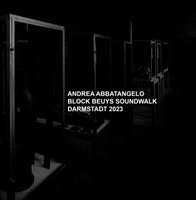
My direct engagement with Block Beuys -the most comprehensive Joseph Beuys installation- provided crucial historical context for my research. This collection of hundreds of elements offered unprecedented insight into Beuys's bee-related work and his theory of social sculpture.


I conducted a sound-walk through the installation, recording my immediate responses:

"Bees as a bunch of little dusty dead bodies, left over in a little corner like chamomile flowers. Engine pipes everywhere. They were meant to connect but that is not possible... There are also a lot of red crosses, they are there to remind us of the emergency we are in."


This experience revealed how Beuys's work anticipated our current ecological crisis while maintaining hope for connection and healing.


Enhydro Inclusions: Consciousness Across Time


The enhydro inclusions I studied became central to my understanding of consciousness and preservation. These water bubbles trapped in ancient amber contain water and air that still move after millions of years -a perfect physical embodiment of Beuys's philosophy about chaos and crystallisation.


The liquid water represents chaotic, individual organic production, while the solid amber matrix represents crystallised, collaborative transformation. These formations suggest the possibility of consciousness preserved across geological time, offering a material basis for understanding how awareness might persist and transform through natural processes.

For me, these inclusions bridge scientific observation with philosophical speculation, embodying my research methodology that treats material investigation as consciousness exploration.


Works Created


"Two Experiments with Pollution"
I documented mosquito larvae developing in highly polluted puddles containing rust and car oil residue, creating a parallel study with the wing development defects observed in laboratory fruit flies. This work bridges environmental observation with scientific methodology.


Ongoing Microscope Observation Series
Daily documentation using advanced optical equipment, developing images through non-chemical photographic processes including cyanotype and vegetable chlorophyll techniques. These observations informed gouache paintings on emulsified canvas that translate microscopic discoveries into artistic interpretation.


Solo Exhibition: "A.A.LLES"

The residency culminated in a solo exhibition at Atelierhaus LEW1, presented as part of the "12. Darmstädter Tage der Fotografie" festival. The show brought together laboratory-informed artworks, documentation of enhydro inclusion research, microscopic visualizations, and sound recordings from my Block Beuys experience.

The exhibition demonstrated how scientific methodology can become creative practice, presenting evidence of my collaborative work with university researchers within a contemporary art context.


Research Impact

This residency transformed my practice from theoretical investigation to hands-on scientific and artistic work. The laboratory skills I acquired, the scientific collaborations I developed, and the theoretical insights I gained through direct engagement with Beuys's legacy became foundational for all my subsequent projects.

The work contributed genuine scientific insights, particularly regarding how individual bee health affects entire colony behavior, while establishing new methodologies for artistic engagement with biological systems. The successful collaboration with university researchers demonstrated the viability of interdisciplinary approaches to environmental crisis.


The enhydro inclusion investigations continue to inform my understanding of consciousness across species and time scales, suggesting new possibilities for artistic engagement with deep time and preserved awareness.


This research was conducted during my artist residency at Atelierhaus LEW1, Darmstadt, March-May 2023, as part of the "12. Darmstädter Tage der Fotografie" festival.


Blog Journal Archive


OPEN CALL


WEEK 1 | FULL STATEMENT


WEEK 2 | OBSERVATIONS


Microscope link


Link to the Journal of the Residency here


Microscope link